

The rapid evolution of data center and telecommunications networks has driven optical transceiver technology through multiple generations of QSFP form factors. Understanding the differences between QSFP+, QSFP28, QSFP56, QSFP112, QSFP-DD, and OSFP is essential for network architects, data center managers, and procurement specialists planning current deployments and future-proof infrastructure. This comprehensive guide breaks down each technology’s specifications, applications, and strategic positioning in the marketplace.
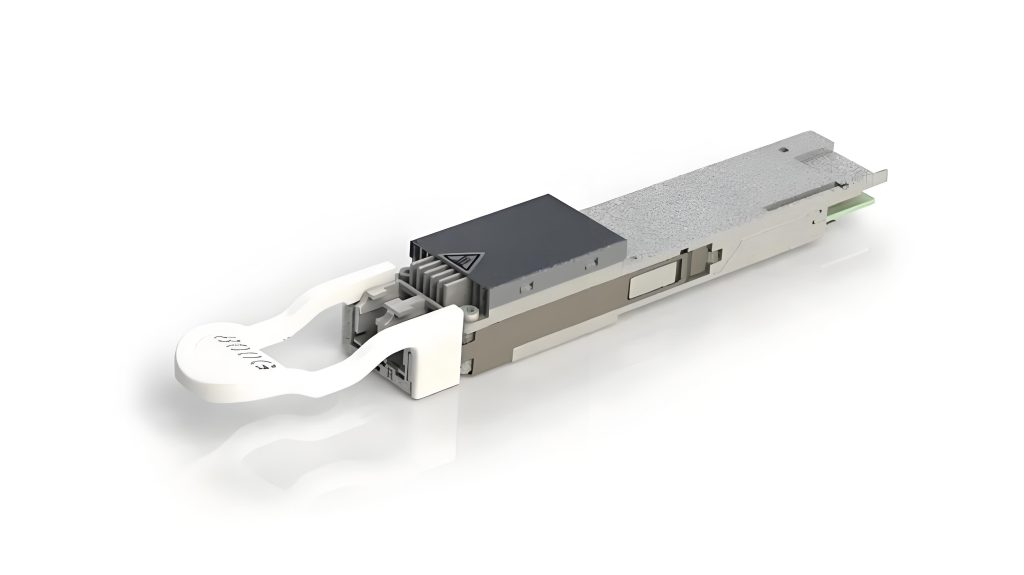
Technical Specifications at a Glance
| Form Factor | Max Data Rate | Lane Configuration | Modulation | Key Applications | Power Range | Physical Footprint |
|---|---|---|---|---|---|---|
| QSFP+ | 40 Gbps | 4 × 10G | NRZ | Legacy 40G networks | 3.5-4W | Standard QSFP |
| QSFP28 | 100 Gbps | 4 × 25G | NRZ | Mainstream 100G DC | 3.5-4.5W | Same as QSFP+ |
| QSFP56 | 200 Gbps | 4 × 50G | PAM4 | 200G transitions | 8-12W | Same as QSFP28 |
| QSFP112 | 400 Gbps | 4 × 100G | PAM4 | High-density 400G | 12-15W | Same as QSFP28 |
| QSFP-DD | 400G (800G capable) | 8 × 50G | PAM4 | Hyperscale 400G+ | 12-18W | 2 rows, slightly wider |
| OSFP | 400G (800G+ designed) | 8 × 50G | PAM4 | High-power/long-haul | 15-21W | Longer, thermal-optimized |
Deep Dive: Each Technology Explained
QSFP+ (40G): The Foundation Generation
Technical Core: Four independent 10G lanes using NRZ modulation
Breakout Capability: 1×40G or 4×10G connections
Common Variants: SR4 (100m multimode), LR4 (10km single-mode)
Market Status: Legacy technology, primarily for upgrades
Cost Analysis: $3-12 per Gbps (highest cost/Gbps in family)
Strategic Position: Avoid for new deployments; consider only for existing 40G infrastructure
QSFP28 (100G): The Current Workhorse
Technical Innovation: 25G per lane NRZ technology maturity
Breakout Capability: 1×100G or 4×25G (to SFP28 ports)
Market Dominance: ≈70% of 100G deployments worldwide
Cost Advantage: $2-8 per Gbps (best value proposition)
Application Sweet Spot: Leaf-spine architectures, 5G fronthaul/midhaul, enterprise core
Future Outlook: Will remain dominant for 3-5 years despite 400G advances
QSFP56 (200G): The Transition Technology
Key Innovation: First PAM4 implementation in QSFP form factor
Backward Compatibility: Operates in QSFP28 ports at 100G speed
Power Challenge: 2-3× increase over QSFP28 (8-12W typical)
Breakout Options: 1×200G, 2×100G, or 4×50G configurations
Strategic Niche: Cost-effective upgrade path from 100G to higher speeds without complete infrastructure overhaul
Adoption Reality: Limited to specific use cases; largely bypassed by many moving directly to 400G
QSFP112 (400G): The Density-Preserving Approach
Engineering Achievement: 400G in original QSFP footprint via 4×100G PAM4 lanes
Technical Challenge: Extreme signal integrity requirements at 100G per lane
Fiber Requirement: SR8 variant needs 16 fibers (vs 8 for competitors)
Panel Density Advantage: Matches QSFP28 exactly—critical for some switch designs
Market Reality: Limited ecosystem support compared to QSFP-DD/OSFP
Ideal Scenario: Maximizing port count in existing QSFP28-designed chassis
QSFP-DD (400G/800G): The Ecosystem Leader
Physical Innovation: Double-density design with second electrical contact row
Key Advantage: Backward mechanical compatibility with QSFP28/56 (with adapter)
Ecosystem Support: Broadest vendor adoption (Cisco, Juniper, Arista, Intel, Broadcom)
Thermal Reality: Often requires active cooling at higher power budgets
Roadmap: QSFP-DD800 (800G) and QSFP-DD1.6T (1.6T) clearly defined
Market Position: Winning the 400G form factor war for general-purpose data centers
OSFP (400G/800G+): The Performance-Optimized Alternative
Design Philosophy: Clean-sheet approach prioritizing thermal performance
Thermal Advantage: ≈30% better heat dissipation than QSFP-DD
Key Strength: Superior support for high-power coherent optics (>15W)
Trade-off: No backward compatibility with QSFP family
Champion Ecosystem: Google, Huawei, some optical component specialists
Ideal Application: Long-haul coherent transmission, high-power environments
Critical Differentiators: What Really Matters
1. Modulation Technology: NRZ vs PAM4
plaintext
NRZ (QSFP+, QSFP28):
- 1 bit per symbol
- Simpler implementation
- Lower power consumption
- Maximum practical speed: 25G per lane

PAM4 (QSFP56 and beyond):
- 2 bits per symbol (doubles data rate)
- Requires advanced DSP equalization
- Higher power consumption
- Enables 50G/100G per lane
2. Thermal Design Evolution
plaintext
Generation        Max Power     Cooling Requirement
QSFP+/QSFP28     <5W           Passive always sufficient
QSFP56           8-12W         Passive often marginal
QSFP-DD          12-18W        Active often required
OSFP             15-21W        Passive adequate in most cases
3. Breakout Flexibility Comparison
plaintext
Form Factor   Native Speed   Breakout Options
QSFP+         40G            4 × 10G
QSFP28        100G           4 × 25G
QSFP56        200G           2 × 100G or 4 × 50G
QSFP-DD       400G           2 × 200G or 8 × 50G
OSFP          400G           Same as QSFP-DD
4. Migration and Compatibility
plaintext
Upgrade Path              Recommended Approach
40G → 100G               QSFP28 switches, reuse fiber
100G → 200G              QSFP56 modules in QSFP28 ports
100G → 400G              QSFP-DD switches with breakout to QSFP28
Any → Long-haul 400G+    OSFP with coherent optics
Application Mapping by Use Case
Data Center Architectures
- Hyperscale Cloud: QSFP-DD dominant for 400G spine, OSFP in Google
- Enterprise/Colocation: QSFP28 for 100G, transitioning to QSFP-DD
- High-Performance Computing: QSFP56 for 200G interconnects, QSFP-DD for 400G
Telecommunications Networks
- 5G Fronthaul (≤15km): QSFP28 with 25G wavelengths
- Mobile Backhaul: QSFP28 and QSFP-DD
- Core/Long-Haul Transport: OSFP with coherent digital signal processing
Specialized Environments
- Financial Trading: QSFP28 for ultra-low latency 100G
- AI/ML Clusters: QSFP-DD for 400G fabric, QSFP56 for 200G server connectivity
- Research/Education: Mix based on budget and performance requirements
Total Cost of Ownership Analysis
Capital Expenditure (CapEx) Components
plaintext
Component          QSFP28        QSFP-DD        OSFP
Transceiver       $300-$1,200   $800-$3,000   $1,000-$3,500
Switch Port       $$            $$$           $$$
Cabling           $             $$            $$
Operational Expenditure (OpEx) Considerations
plaintext
Factor            QSFP28        QSFP56+        Notes
Power/Module      3.5-4.5W      8-21W         PAM4 increases power 2-5×
Cooling           Minimal       Significant   Active cooling often needed
Rack Space        Standard      Similar       OSFP slightly longer
Cost per Gbps Trajectory (2024)
plaintext
Form Factor   Cost/Gbps (Range)   Trend
QSFP+         $3-12               Stable (legacy)
QSFP28        $2-8                Declining slowly
QSFP56        $3-6                Rapidly declining
QSFP-DD       $1.5-4              Declining 20-30%/year
OSFP          $2-5                Declining, premium persists
Strategic Procurement Recommendations
| Scenario | Priority | Recommended Choice | Secondary Option |
|---|---|---|---|
| New 100G deployment | Cost efficiency | QSFP28 | N/A |
| 100G → 200G upgrade | Investment protection | QSFP56 | QSFP-DD with breakout |
| Greenfield 400G DC | Ecosystem support | QSFP-DD | OSFP if vendor-aligned |
| Long-haul 400G+ | Performance/reach | OSFP | QSFP-DD with coherent |
| Maximize existing chassis | Port density | QSFP112 | QSFP-DD with adapters |
| Uncertain roadmap | Flexibility | QSFP-DD | Multi-vendor QSFP28 |
Future Outlook: 2024-2030 Roadmap
Near Term (2024-2026)
- QSFP28: Maintains 100G volume leadership
- QSFP-DD: Solidifies 400G market dominance
- 800G Deployments: Begin in hyperscale and AI clusters
- Price Erosion: 400G modules drop below $2/Gbps
Medium Term (2027-2029)
- 1.6T Technology: Becomes commercially viable
- Co-Packaged Optics: Begin displacing pluggables for shortest reaches (<2m)
- QSFP-DD1.6T: Likely dominant form factor
- OSFP Evolution: Continues in high-power niche
Long Term (2030+)
- 3.2T on horizon: Likely requiring new form factors
- Silicon Photonics: Mainstream in high-performance modules
- Intelligent Optics: Embedded monitoring and analytics
Decision Framework: Choosing the Right Technology
Step 1: Assess Current State
- Existing infrastructure (switches, cables, management systems)
- Skill sets and operational experience
- Vendor relationships and commitments
Step 2: Define Requirements
- Bandwidth needs (current + 3-year projection)
- Distance requirements
- Power/cooling constraints
- Budget parameters (CapEx vs OpEx sensitivity)
Step 3: Evaluate Options
plaintext
For 100G needs:        QSFP28 (unless already deploying 400G)
For 200G needs:        QSFP56 if backward compatibility needed, else QSFP-DD
For 400G needs:        QSFP-DD unless thermal/power demands dictate OSFP
For future-proofing:   QSFP-DD for broadest ecosystem
Step 4: Consider Hybrid Approaches
- Phased Migration: QSFP28 today with QSFP-DD-ready switches
- Mixed Fabric: QSFP-DD spines with QSFP28/56 leaves
- Application-Specific: OSFP for long-haul, QSFP-DD for data center
Conclusion: Key Takeaways for Network Professionals
- QSFP28 remains the safe, cost-effective choice for 100G deployments and will continue to dominate through 2026.
- QSFP-DD is winning the 400G form factor battle due to backward compatibility and broad ecosystem support.
- OSFP excels where thermal performance is critical, particularly for high-power coherent applications.
- QSFP56 serves a specific transition niche but is largely bypassed by organizations moving directly to 400G.
- QSFP112 maintains panel density but faces significant ecosystem challenges.
- Total cost of ownership increasingly favors higher speeds as 400G pricing approaches 100G on a per-Gbps basis.
- Future-proofing requires understanding vendor roadmaps more than spec sheet comparisons.
The optimal choice depends on your specific combination of technical requirements, existing infrastructure, budget constraints, and strategic direction. There is no universally “best” option—only the best solution for your organization’s unique circumstances. As bandwidth demands continue their relentless growth, understanding these QSFP variants ensures informed decisions that balance performance, cost, and future readiness.

