

Introduction: Understanding SFP Evolution
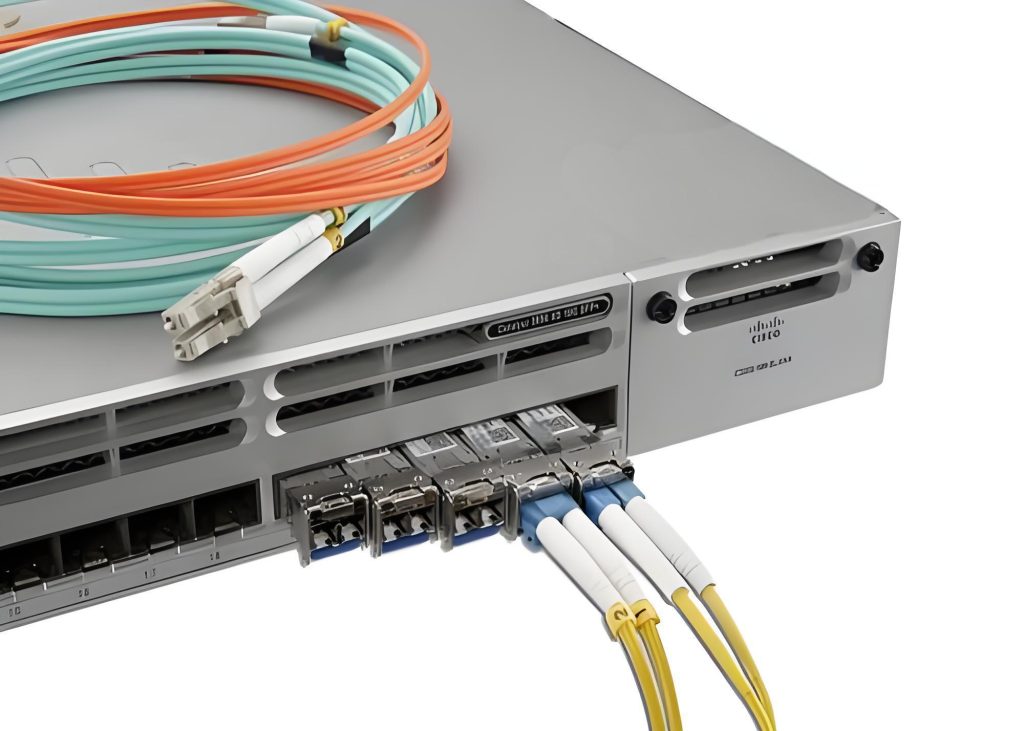
In today’s data-driven world, network infrastructure requires precise selection of optical transceivers. With SFP, SFP+, SFP28, and SFP56 all available in the market, network administrators face critical decisions that impact performance, cost, and future scalability. This comprehensive guide breaks down each technology, helping you make informed decisions for your specific application needs.
Quick Navigation:
- SFP (1G) – The Legacy Standard
- SFP+ (10G) – The Workhorse
- SFP28 (25G) – The Modern Standard
- SFP56 (50G) – The Next Generation
- Comparison Tables & Selection Guide
- Future Outlook & Recommendations
SFP (1G): The Foundation of Modern Networking
Technical Specifications
- Data Rate: 1 Gigabit per second
- Standards: IEEE 802.3z (1000BASE-SX/LX/EX/ZX)
- Typical Applications:
- Enterprise network edge
- Legacy switch connections
- Small business networks
- Industrial Ethernet
- Maximum Distance: Up to 160 km with 1000BASE-EX/ZX
- Power Consumption: <1W typically
When to Choose SFP:
- Maintaining legacy 1G infrastructure
- Cost-sensitive deployments where 1G suffices
- Industrial environments with existing 1G equipment
- Connections where bandwidth requirements are minimal
SEO Keywords: 1G SFP modules, Gigabit Ethernet SFP, legacy SFP compatibility, 1000BASE-SX SFP price
SFP+ (10G): The Industry Workhorse
Technical Specifications
- Data Rate: 10 Gigabits per second
- Standards: IEEE 802.3ae (10GBASE-SR/LR/ER/ZR)
- Key Innovation: Same form factor as SFP with 10× speed
- Typical Applications:
- Data center server connections
- Network aggregation points
- Storage Area Networks (SAN)
- Enterprise core networking
- Maximum Distance: Up to 80 km with 10GBASE-ZR
- Power Consumption: 1-1.5W typically
When to Choose SFP+:
- Building or upgrading 10G networks
- Connecting servers in modern data centers
- Cost-effective 10G implementations
- Environments requiring proven, stable technology
SEO Keywords: 10G SFP+ modules, 10GBASE-SR SFP+, SFP+ vs SFP difference, cheap SFP+ transceivers
SFP28 (25G): The Modern Standard
Technical Specifications
- Data Rate: 25 Gigabits per second
- Standards: IEEE 802.3by (25GBASE-SR/LR)
- Key Innovation: Optimal balance of speed and cost
- Typical Applications:
- Modern data center leaf-spine architectures
- 5G mobile network fronthaul
- High-performance computing clusters
- Storage networks requiring 25G
- Maximum Distance: Up to 40 km with appropriate modules
- Power Consumption: 1.5-2W typically
When to Choose SFP28:
- Greenfield data center deployments
- 5G infrastructure builds
- Upgrading from 10G to higher speeds
- Environments where 25G provides the best cost/performance ratio
SEO Keywords: 25G SFP28 optics, SFP28 vs SFP+ comparison, 25GBASE-SR price, SFP28 for 5G networks
SFP56 (50G): The Next Generation
Technical Specifications
- Data Rate: 50 Gigabits per second
- Standards: Emerging standards (IEEE 802.3cd influenced)
- Key Innovation: PAM4 modulation in SFP form factor
- Typical Applications:
- Next-generation data centers
- AI/ML infrastructure
- High-frequency trading networks
- Upgraded spine connections
- Maximum Distance: Currently up to 2 km (evolving)
- Power Consumption: 3-4W typically
When to Choose SFP56:
- Future-proofing high-performance networks
- AI/ML workload infrastructure
- Environments requiring maximum density
- When preparing for 100G/400G migration
SEO Keywords: 50G SFP56 transceivers, PAM4 SFP modules, next-generation SFP, SFP56 compatibility
Side-by-Side Comparison Tables
Technical Comparison
| Feature | SFP (1G) | SFP+ (10G) | SFP28 (25G) | SFP56 (50G) |
|---|---|---|---|---|
| Data Rate | 1 Gbps | 10 Gbps | 25 Gbps | 50 Gbps |
| Modulation | NRZ | NRZ | NRZ | PAM4 |
| Typical Use | Legacy networks | 10G data centers | Modern DC/5G | Next-gen/AI |
| Max Distance | 160 km | 80 km | 40 km | 2 km (currently) |
| Power | <1W | 1-1.5W | 1.5-2W | 3-4W |
| Cost/Port | $ | $$ | $$$ | $$$$ |
Application Matrix
| Application | Recommended Form Factor | Alternative Options |
|---|---|---|
| Enterprise Edge | SFP (1G) | SFP+ if future growth expected |
| Data Center Server | SFP28 (25G) | SFP+ for budget, SFP56 for future |
| Network Aggregation | SFP+ (10G) or SFP28 (25G) | Based on traffic volume |
| 5G Mobile Networks | SFP28 (25G) | Industry standard for fronthaul |
| AI/ML Infrastructure | SFP56 (50G) | SFP28 if budget constrained |
| Storage Networks | SFP+ (10G) or SFP28 (25G) | Based on storage array speed |
Selection Guide: How to Choose the Right Transceiver
Step 1: Assess Your Current Infrastructure
- What switches/routers are you using?
- What speeds do they support?
- Are you upgrading or building new?
Step 2: Determine Performance Requirements
- Bandwidth needs: Calculate current and projected traffic
- Distance requirements: Campus, metro, or long-haul?
- Latency sensitivity: Financial trading, HPC, or general use?
Step 3: Consider Future Growth
- Will you need to upgrade in 2-3 years?
- Is your industry rapidly evolving (5G, AI, etc.)?
- What is your budget for future upgrades?
Step 4: Cost Analysis
| Scenario | Most Cost-Effective | Best Performance | Future-Proof Choice |
|---|---|---|---|
| Small Business | SFP (1G) | SFP+ (10G) | SFP+ (10G) |
| Growing Enterprise | SFP+ (10G) | SFP28 (25G) | SFP28 (25G) |
| Data Center | SFP28 (25G) | SFP56 (50G) | SFP56 (50G) |
| Telecom/5G | SFP28 (25G) | SFP28 (25G) | SFP56 (50G) |
Common Questions & Expert Answers
Q1: Can SFP+ modules work in SFP ports?
A: No, they are electrically incompatible. However, many SFP+ ports can accept SFP modules (at 1G speed).
Q2: Is SFP28 backward compatible with SFP+?
A: Typically no, as they use different electrical interfaces. Some switches support both via combo ports.
Q3: Why choose SFP28 over SFP+ when SFP56 exists?
A: SFP28 offers the best balance of performance and cost today. SFP56 carries a significant premium and is best for specific high-performance applications.
Q4: How does PAM4 in SFP56 affect performance?
A: PAM4 (Pulse Amplitude Modulation 4-level) allows double the data rate in the same bandwidth but requires more sophisticated DSP and has slightly higher latency.
Q5: What about SFP-DD and other future form factors?
A: While SFP-DD (100G in SFP form factor) is emerging, SFP56 represents the practical limit for single-lane SFP technology. Future growth will likely require new form factors.
Best Practices for Implementation
1. Vendor Compatibility
- Always verify compatibility with your switch vendor
- Consider third-party compatible modules for cost savings
- Test before large-scale deployment
2. Cable Selection
- Match cable type to transceiver requirements
- Consider DAC (Direct Attach Copper) for short distances
- Use fiber optimization tools for longer runs
3. Monitoring & Management
- Utilize DDM/DOM (Digital Diagnostic Monitoring)
- Implement temperature monitoring
- Establish regular performance baselines
4. Spare Strategy
- Maintain 10-15% spares for critical links
- Consider different vendors for redundancy
- Document all deployments thoroughly
Conclusion: Making the Right Choice
The evolution from SFP to SFP56 represents the networking industry’s response to exponentially growing bandwidth demands. Each generation serves specific needs:
- Choose SFP for legacy systems and cost-sensitive 1G applications
- Choose SFP+ for proven, reliable 10G performance
- Choose SFP28 for modern 25G deployments with the best value
- Choose SFP56 for cutting-edge 50G applications and future-proofing
Final Recommendation: For most organizations building or upgrading networks today, SFP28 offers the optimal balance of performance, cost, and future readiness. As SFP56 prices continue to drop, it will become increasingly attractive for high-performance applications.

