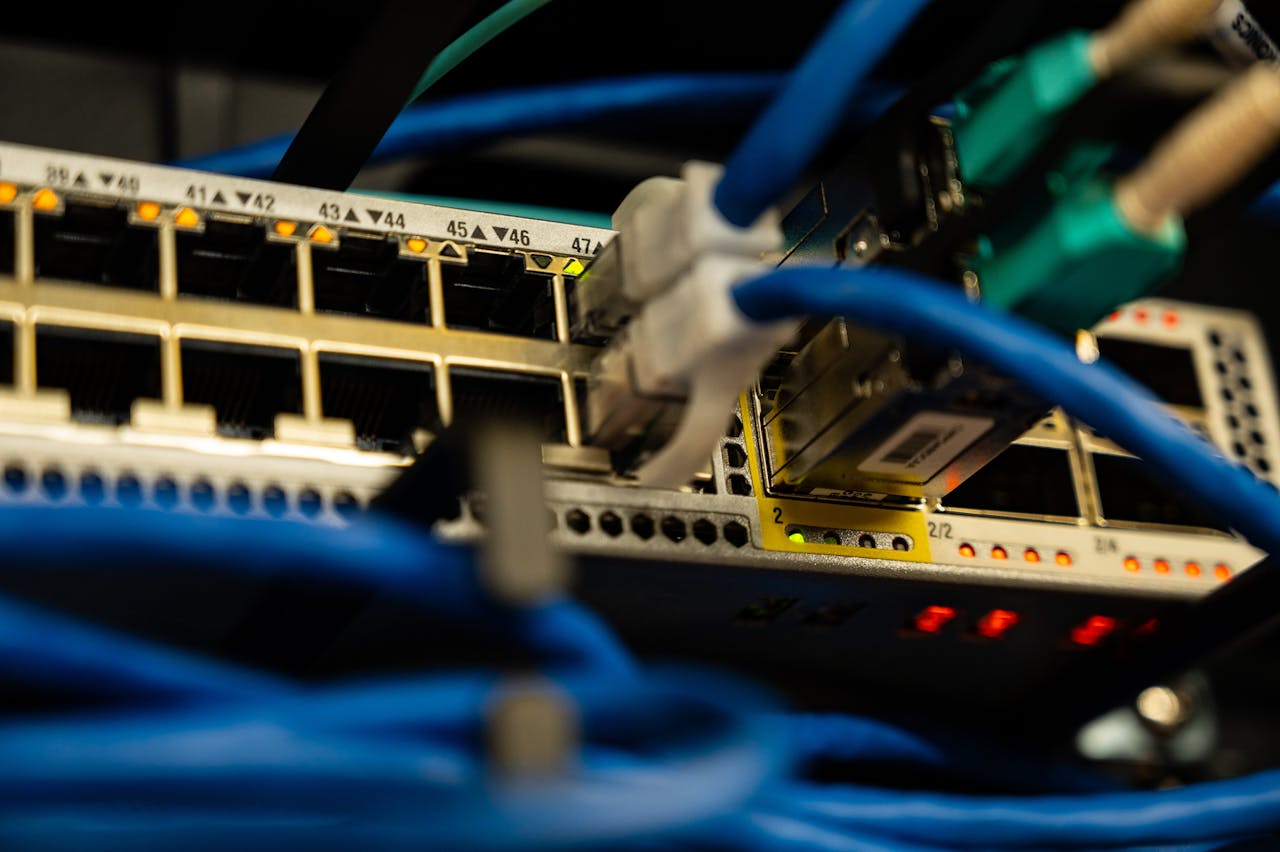
Network switch manufacturers, particularly industry leaders like Cisco, Huawei, and others, often implement encryption and locking mechanisms on their devices’ optical module interfaces (SFP, SFP+, QSFP28, etc.). The primary stated goals are to ensure quality assurance, compatibility, and reliability by preventing the use of unauthorized or third-party optical modules1410. This practice effectively creates a vendor lock-in, making original equipment manufacturer (OEM) modules a significant revenue stream. This document explores the common encryption technologies employed and methods to achieve compatibility for non-OEM modules.
1. Common Encryption and Locking Technologies
The security mechanisms primarily involve validating data stored in the optical module’s EEPROM memory via the I²C (Inter-Integrated Circuit) interface.
1.1. EEPROM Data Structure and Validation
Optical modules contain an EEPROM chip storing vital data defined by Multi-Source Agreements (MSAs), such as:
- Vendor name, model number, serial number
- Module type (e.g., SFP+), wavelength, transfer distance, bitrate
- Diagnostic Monitoring (DDM/DOM) thresholds and real-time data
Switch operating systems read this data during initialization. Encryption or locking techniques often target the vendor-specific area of the EEPROM.
1.2. Types of Vendor Strategies
Based on search results, vendor strategies can be categorized358:
| Strategy Type | Description | Typical Vendors |
|---|---|---|
| No Encryption/Control | Switch does not validate module origin; any MSA-compliant module works. | Most white-box switch vendors, some branded vendors’ low-end products. |
| Basic (Plaintext) Checks | Switch checks for specific, often static, vendor codes or strings in the EEPROM. These codes are easily copied. | Some NIC vendors and older/less strict switch models. |
| Strict (Dynamic) Encryption | Switch validates a cryptographic checksum, hash, or digital signature calculated from specific module data (e.g., serial number, vendor ID) using a secret algorithm and key stored in the switch’s firmware. | Cisco (historically strong), Huawei, and other major vendors with in-house module production. |
Cisco’s Historical “Security Key” Mechanism: Earlier Cisco documentation describes a mechanism where each genuine Cisco module contains a unique software key1410. The switch verifies this key during operation. If the key is invalid or missing, the port may log errors (%PM_SCP-SP-3-TRANSCEIVER_UNSUPPORTED, %GBIC_SECURITY_CRYPT-4-VN_DATA_CRC_ERROR) and be placed in an err-disable state1610.
Advanced Encryption (e.g., Huawei’s PHYSec): Newer technologies like Huawei’s StarLink modules with PHYSec implement physical layer encryption within the module’s oDSP (optical Digital Signal Processor), aiming for full-link encryption of the optical signal itself27. This is a more sophisticated hardware-based security measure compared to EEPROM validation.
2. Circumvention Methods for Compatibility
Achieving compatibility often involves either modifying the module’s data or altering the switch’s behavior.
2.1. Module Re-coding (Re-flashing)
This is the most common method for bypassing basic and some strict checks.
- Process: Using a dedicated EEPROM programmer (often called a “writer” or “re-coder”), the vendor-specific fields of a third-party module’s EEPROM are overwritten. This data is copied from genuine modules or generated using algorithms reverse-engineered by compatible module manufacturers358.
- Challenges:
- Dynamic Codes: For strict encryption, simple copying is insufficient. The algorithm and required input fields (SN, date) must be known.
- Password Protection: Many modules have write passwords set by the original manufacturer to prevent easy re-coding59.
- Persistence: Poorly re-coded data might be reset after a reboot or power cycle5.
- Tools: Specialty re-coding boxes support various form factors (SFP, QSFP-DD)389.
2.2. Switch Configuration Commands (The “Service Unsupported-Transceiver” Method)
Some vendors, like Cisco, have hidden commands that can disable the module verification check.
- Example Cisco IOS/XE Command:bash复制下载configure terminal service unsupported-transceiver # <– The key hidden command interface TenGigabitEthernet1/0/25 no errdisable detect cause gbic-invalid speed nonegotiate end copy running-config startup-config
service unsupported-transceiver: This is a hidden command (does not appear in help/TAB completion) that globally tells the switch to skip the EEPROM validation check for unsupported modules146.no errdisable detect cause gbic-invalid: Prevents the port from being automatically error-disabled if an invalid module is detected.- Important Note: Using this command typically triggers a warning message from Cisco stating that warranty support may be withheld if a fault is traced to a third-party transceiver1410.
2.3. Using Modules from Compatible Third-Party Vendors
Many reputable third-party optical module manufacturers invest heavily in reverse-engineering vendor codes and algorithms. They sell pre-coded modules guaranteed to be compatible with specific switch brands (e.g., “Cisco Compatible SFP+”). This is often the simplest and most reliable method for end-users.
3. Technical and Legal Considerations
- Warranty Voidance: Using non-OEM modules, especially in conjunction with commands like
service unsupported-transceiver, will likely void support and warranty for the specific switch and related network issues from the OEM’s perspective110. - Reliability Risks: The quality of third-party modules can vary. OEMs argue their validation ensures reliability, which might be compromised.
- Algorithm Complexity: Modern encryption methods (like Huawei’s PHYSec)27 and increasingly sophisticated dynamic codes are extremely difficult to crack, making generic circumvention impractical for average users.
- Ethical and Legal Implications: Circumventing technological protection measures might violate the switch’s End User License Agreement (EULA) or terms of service. In some jurisdictions, it may potentially contravene laws like the Digital Millennium Copyright Act (DMCA) if it involves reversing engineered firmware intended to control access to a copyrighted work (the switch OS). Always consult legal counsel regarding compliance.
Conclusion and Recommendations
Achieving compatibility with non-OEM optical modules involves understanding the level of security employed by the switch vendor.
Accept OEM Cost: For mission-critical infrastructure where stability and vendor support are paramount, using OEM modules remains the recommended path.
Check Vendor Policy: First, identify if the switch brand/model enforces strict locking (like older Cisco) or uses simpler checks.
Pre-coded Third-Party Modules: For most users, sourcing pre-coded compatible modules from reliable third-party vendors is the safest and most efficient method. It avoids direct tampering with switch software.
Switch Command (Use with Caution): If using generic modules and the switch platform supports it (e.g., older Cisco IOS), the service unsupported-transceiver command can be a software-based solution, albeit with potential warranty implications.
Re-coding: This is generally a method for specialized vendors or advanced users with the right tools and knowledge of the specific codes required. It’s less practical for one-off cases.